
Dispatch 06 · Belonging & Identity
The People Who Cheer for Strangers
Thousands of people dress alike, shout together and say “we” about athletes they have never met.
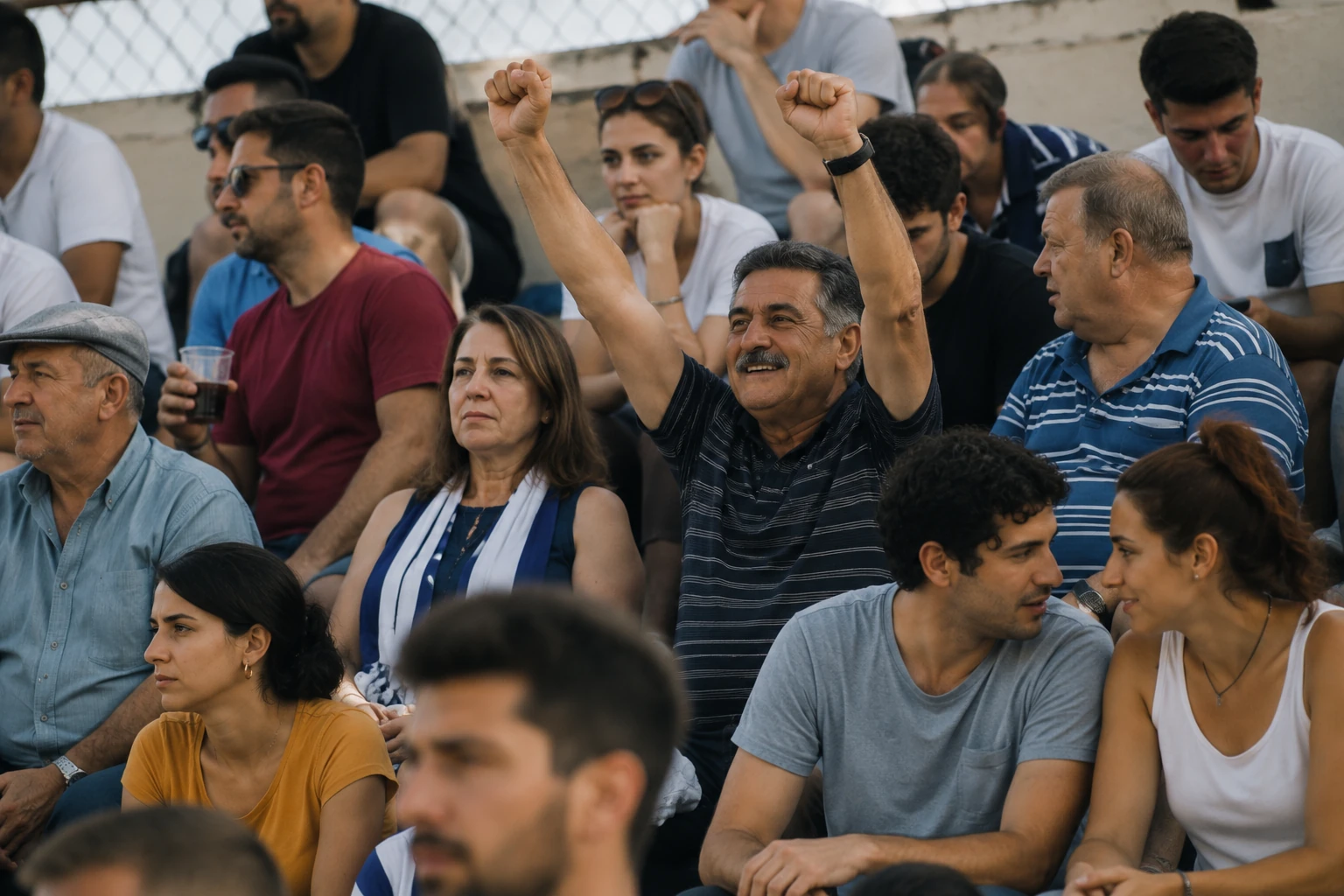
Two hours before the match, strangers begin recognizing one another by color. Scarves appear in windows. A man greets another man he has never met with an embrace usually reserved for relatives. Nobody asks whether they share politics, work, religion or taste in music. Today those categories have temporarily lost to a shirt.
The people they have come to watch are also mostly strangers. The players do not know the names of nearly anyone in the stands. This does not prevent the crowd from speaking about them in the first person plural. We need a goal. We are playing too cautiously. We deserved that.
When the home side scores, thousands of separate bodies behave for several seconds like one organism. The reaction is synchronized without rehearsal: people rise, shout, turn toward one another and touch strangers. A private emotion becomes public almost instantly.
The same machinery can produce hostility. The opposing colors sharpen the home identity. Insults become easier when a person can be reduced to the group they represent. Belonging and rivalry are close neighbors.
Yet the attraction is not merely aggression. Fans describe continuity across generations, shared rituals, memories attached to parents and children, and the peculiar pleasure of caring about an outcome whose practical consequences may be almost zero.
Humans can build a powerful “we” around people who may never know their names. Social identity research helps explain why victories can feel personal, why group symbols matter and why belonging through sport can sometimes contribute to meaning and social support.
The remarkable thing may not be that people care too much about games. It may be how readily humans can transform a game into a durable social world.