Dispatch 02 · Borders & Movement
The Messages That Cross the Wall
A fortified wall cut through a valley and separated families. Some messages still find a way across.
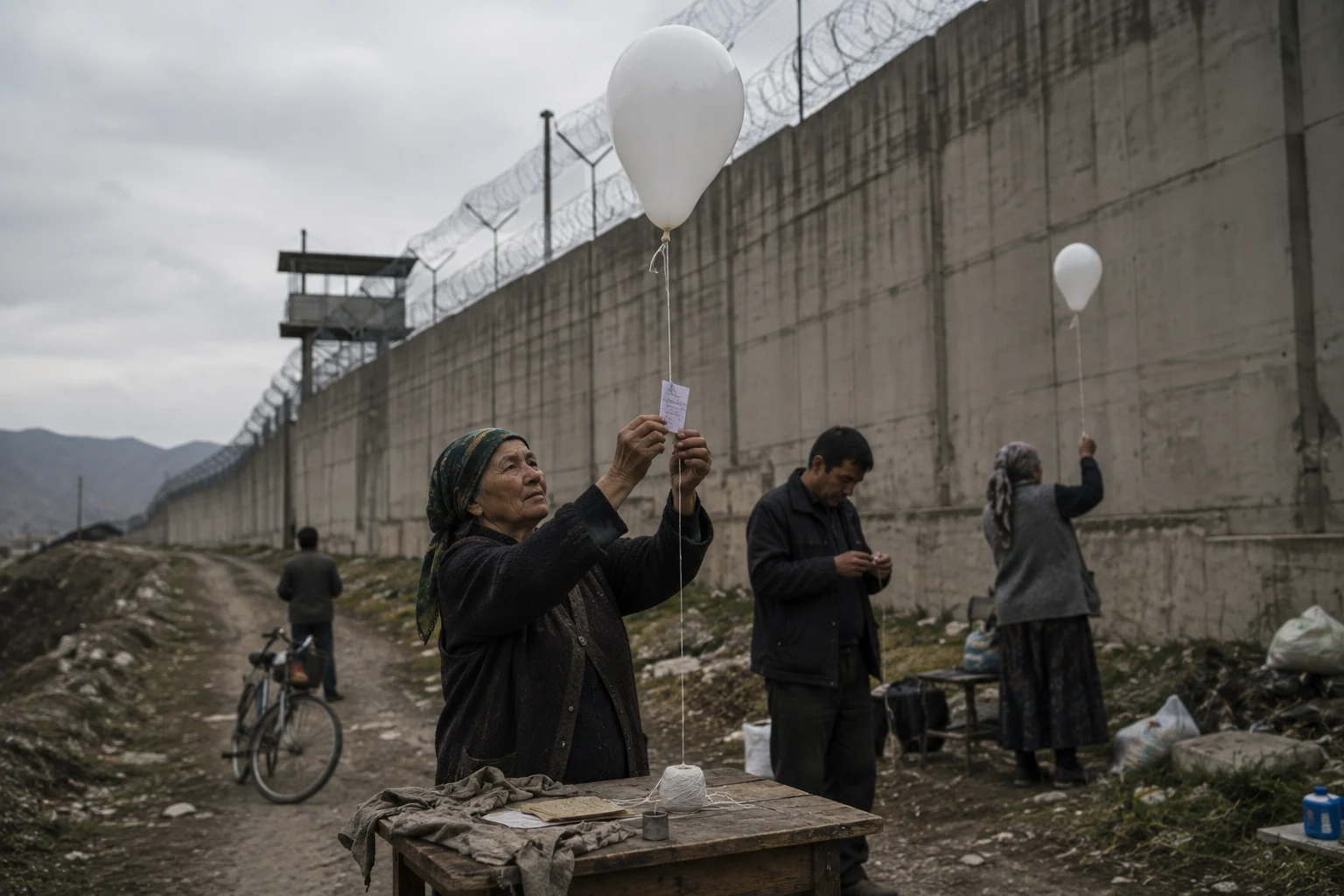
The wall is taller than it looks in photographs. Up close, it is less a line than a piece of weather: concrete, fencing, warning signs and razor wire running beyond the point where the eye stops following it. The valley existed before the wall. The families on either side did too.
On the morning we visit, an older woman named Mara stands beside a folding table with a square of paper. She writes six lines, folds the note twice and ties it beneath a white balloon. Her sister lives twelve kilometers away. Mara has not seen her in seventeen years.
The division began as a political emergency and hardened into ordinary life. Roads ended. Farms were cut in two. People who had once walked to one another’s kitchens became residents of different jurisdictions. Children grew up knowing cousins mostly through stories. The wall did what walls are built to do: it made crossing difficult. It did not make relationships disappear.
The balloons are unofficial, unreliable and occasionally absurd. Some land a few streets away. Some are found days later. Some vanish. Nobody pretends this is an efficient postal service. That may be why the notes are so ordinary. Mara writes that a nephew has started working. She asks whether the apricot tree survived the cold. She says she made the soup their mother used to make.
Around her, nobody behaves as though they are participating in a grand symbolic act. A man repairs a bicycle. Someone pours tea. Two children chase a balloon that has not yet been tied to anything. The wall is the extraordinary thing; the people beside it are trying to remain ordinary.
Mara releases the balloon. It rises, catches a crosswind and drifts toward the concrete. For a few seconds everyone watches. Then the bicycle repair resumes.
Human beings draw borders for many reasons: security, sovereignty, war, identity, administration. But a border can separate political units much more cleanly than it separates human attachments. What happens to family life when the map changes faster than love does?