
Dispatch 05 · Everyday Life
The Day Nobody Owns Anything
For one day each year, ownership becomes surprisingly negotiable.
The ladder appears outside a house shortly after sunrise. A handwritten card hangs from the second rung: TAKE IT TODAY. BRING IT BACK TOMORROW. OR DON’T.
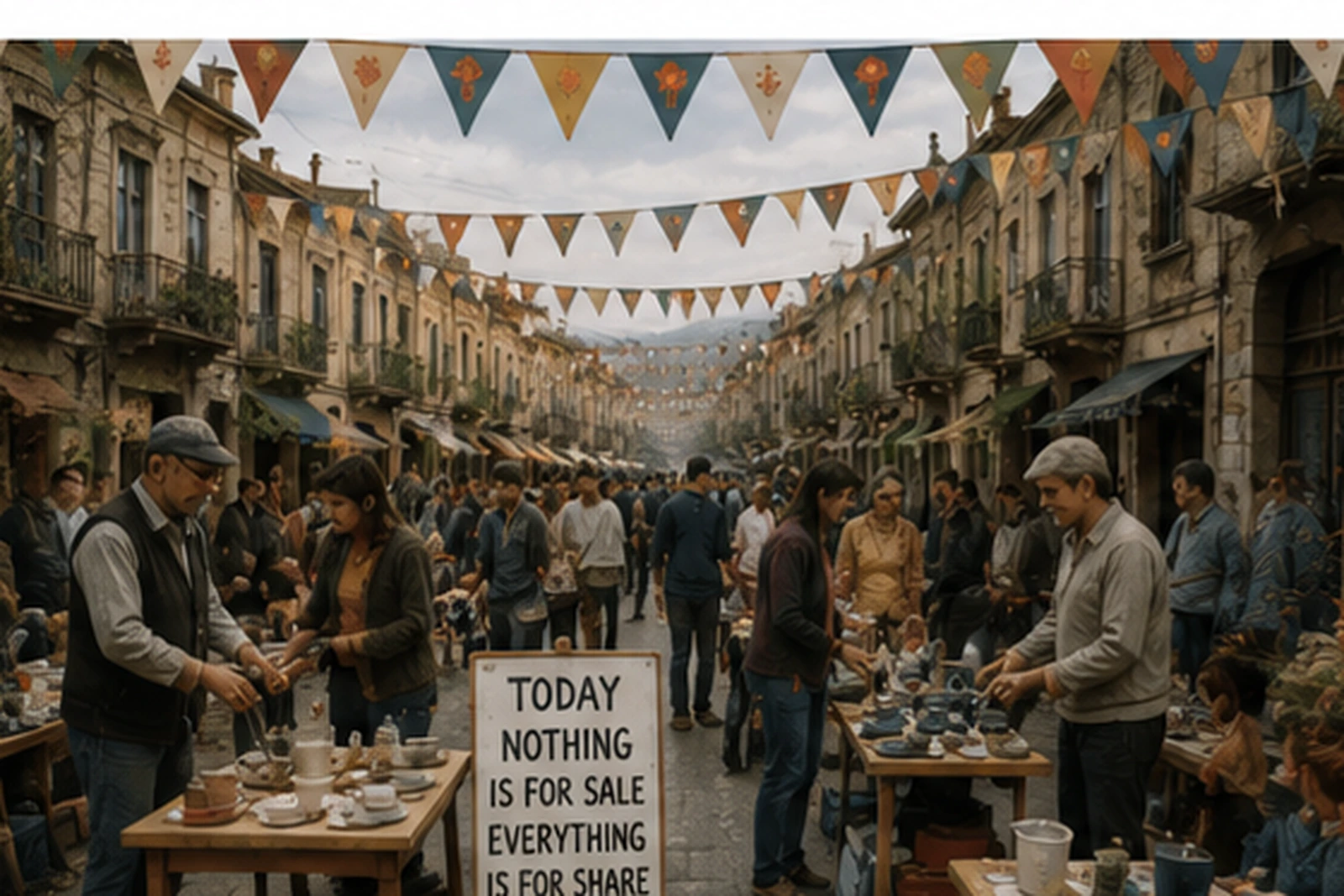
By nine, the street contains boxes of tools, serving dishes, books, children’s clothes and three chairs that nobody seems to want. People lend useful things and give away useless ones. Some gifts are generous. Some are clearly acts of household cleaning disguised as generosity.
The annual custom is known loosely as the Day Nobody Owns Anything, although this is not literally true. Houses remain houses. Nobody hands over a bank account. What changes for a few hours is the social rule around possession: asking becomes easier, lending becomes expected, and refusing an offered object can require more explanation than accepting it.
The exchanges are not free of calculation. A beautiful gift can raise the status of the giver. A neighbor who borrowed repeatedly last year feels pressure to offer something this year. One woman keeps a mental record of who returns things repaired. Generosity creates warmth, but gifts can also create obligation.
Late in the day, the ladder is gone. The next morning it returns with one loose rung tightened and a new card: THANK YOU. The owner smiles when he sees the repair.
Economists can describe exchange through prices. Human beings also exchange through gifts, favors, hospitality, charity, reciprocity and debt that is social rather than financial. A gift can move an object while simultaneously moving the relationship between two people.
Why do humans give things away when keeping them would seem materially rational? The answer turns out to involve pleasure, identity, reputation, obligation and the very old social power of reciprocity.