
Dispatch 04 · Ritual & Belief
A Place Is Set for Someone Who Died
Once a year, this family cooks for six people and sets the table for seven.
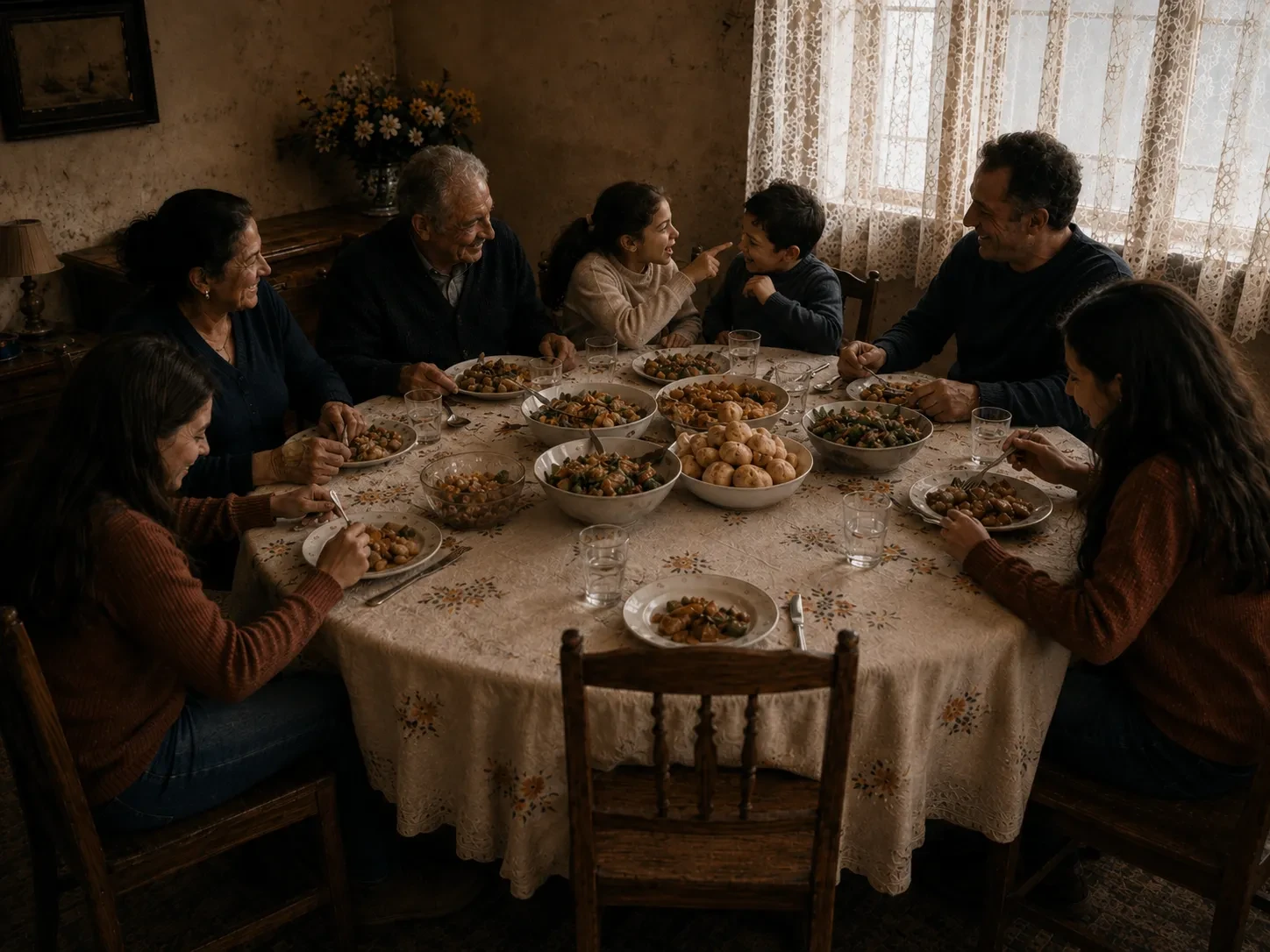
The extra chair is not ceremonial-looking. It is the same wooden chair that spends the rest of the year by a bedroom wall. On this evening it is carried to the table, wiped down and placed between two daughters who disagree about almost everything.
The place setting belongs to their grandmother, who died nine years ago. Her glass is filled. A small serving of food is placed on her plate. Nobody expects her to eat it. Nobody at the table seems confused about whether she is dead.
Dinner proceeds like family dinners do. Someone arrives late. Two people argue about money. A child is corrected for reaching across a bowl. Then a story about the grandmother begins, and everyone talks at once because everyone remembers a different version.
The empty place changes the grammar of the room. She is absent, but she is not treated as nonexistent. Her preferences are remembered. Her sayings are imitated. Her mistakes are discussed more freely than they were in the first years after her death.
When we ask why the plate is necessary, the eldest daughter gives an answer that seems almost too simple: “Because she is still part of the family.”
Death has changed the relationship. It has not erased it. Humans in many societies speak to the dead, cook for them, visit them, preserve their belongings, tell their stories and assign them continuing roles in family life. Psychology once often emphasized detachment from the deceased as part of grief. More recent work has paid closer attention to continuing bonds—and to the fact that such bonds can comfort some people and trouble others.
The Humanistan table is invented. The impulse behind it is not.